
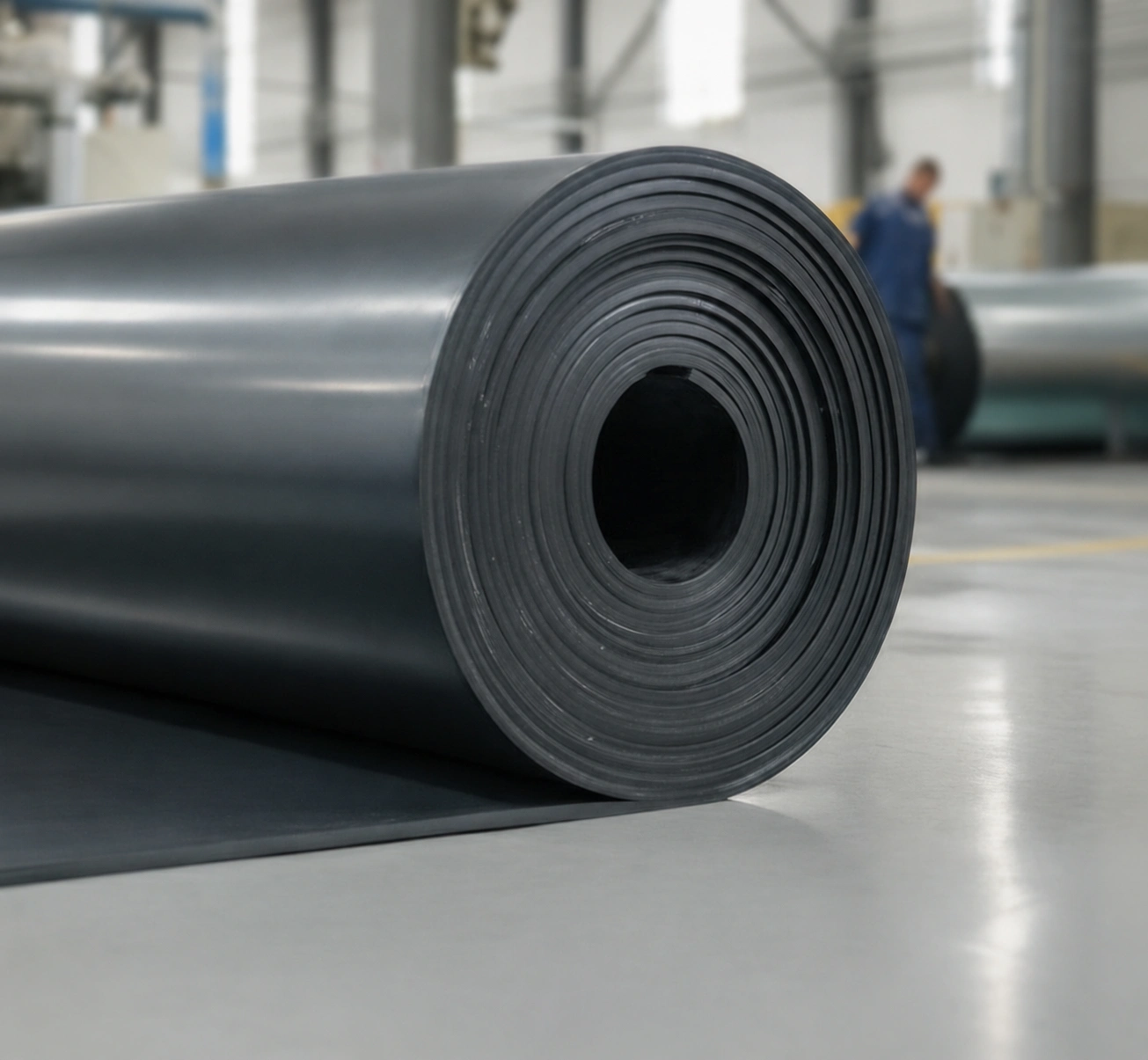
In heavy industry, material failure rarely happens without warning. More often, it develops gradually through constant vibration, chemical exposure, abrasion, or thermal stress until machinery becomes unstable, maintenance intervals shorten, and unplanned downtime starts affecting production schedules.
In many cases, the problem is not the machinery itself, but the material surrounding and protecting it. This is where properly specified industrial rubber sheets become indispensable. Whether used beneath heavy equipment, fabricated into sealing systems, installed as insulation, or applied as protective lining, industrial rubber sheeting plays a critical role in maintaining operational reliability across manufacturing plants, processing facilities, engineering workshops, and heavy industrial environments.
The difficulty, however, is that no single rubber compound is suitable for every application. A material that performs exceptionally well as anti-vibration rubber sheeting may be unsuitable for prolonged chemical exposure. Likewise, a compound with excellent oil resistance may not deliver the flexibility or abrasion resistance required elsewhere in the plant. Selecting the right physical parameters and polymer base is an operational requirement that directly impacts long-term operating costs.
Why Rubber Compound Selection Matters
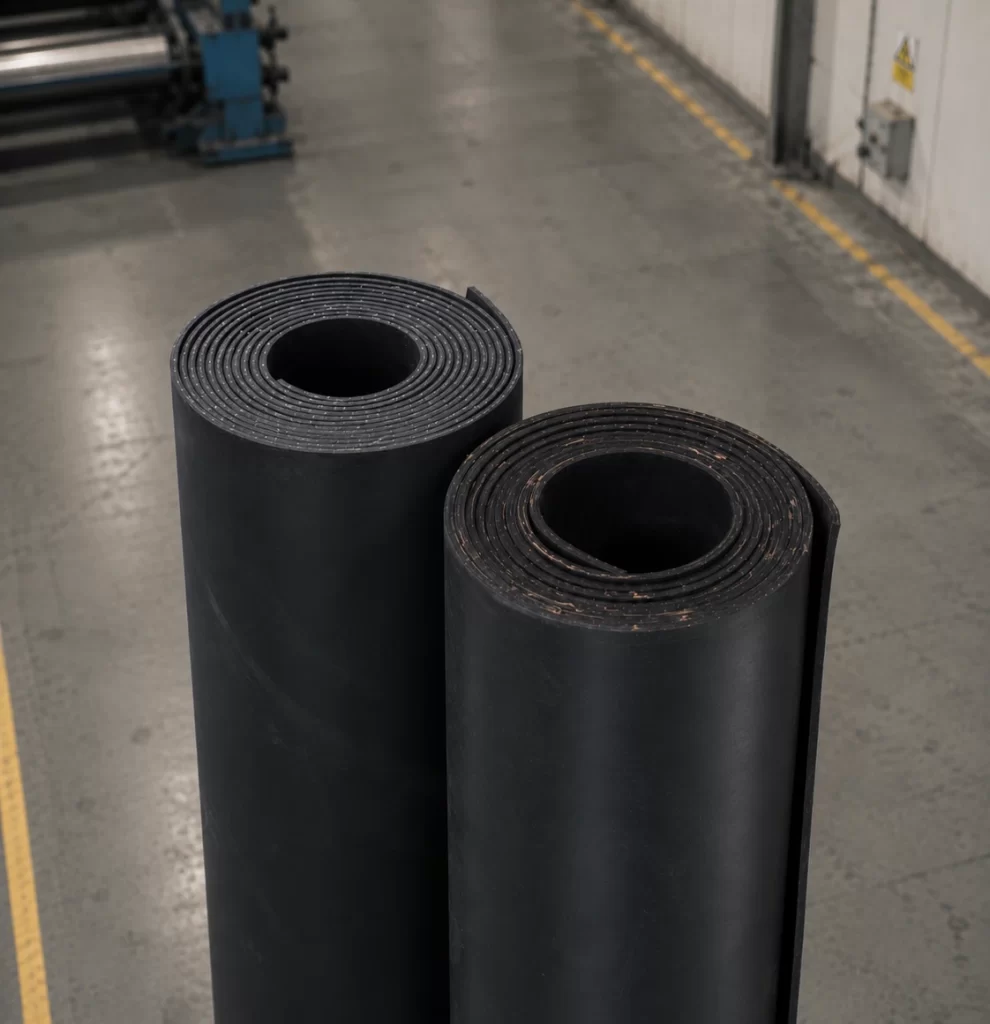
Industrial rubber sheeting is often expected to perform several functions simultaneously. Depending on the environment, it may need to:
- Absorb vibration and reduce structural noise
- Resist oils, grease, or harsh chemicals
- Protect heavy-duty surfaces from severe abrasion
- Provide thermal or electrical insulation barriers
- Maintain sealing performance under continuous pressure
- Improve operator safety in high-traffic workshop areas
When the wrong material is selected, the consequences are usually predictable: premature hardening or cracking, compression deformation, reduced sealing efficiency, accelerated wear, and equipment instability. From an engineering perspective, the cost of failure is rarely the sheet itself. The real expense comes from production interruptions, labour hours, replacement work, and shortened equipment life. This is precisely why experienced maintenance teams and procurement departments evaluate performance characteristics first and wholesale rubber sheets price second.
NR/SBR Rubber Sheets: Reliable Anti-Vibration Performance
Natural Rubber (NR) and Styrene-Butadiene Rubber (SBR) blends remain among the most widely used materials for general industrial applications, particularly where vibration control is important. These compounds provide excellent elasticity, strong resilience under repeated load, and effective shock absorption.
For this reason, NR/SBR materials are commonly used as machinery mounting pads, protective workshop flooring, conveyor skirting, and impact absorption layers. Typical technical characteristics include a Shore A hardness generally between 50 and 70, high elongation at break, and good dynamic fatigue resistance.
In facilities operating continuously under dynamic load conditions, properly specified anti-vibration rubber sheeting helps reduce structural vibration transfer throughout machinery frames. Over time, this contributes to lower mechanical fatigue, quieter operation, and significantly extended maintenance intervals.
NBR Rubber Sheets: Oil and Fuel Resistance for Mechanical Environments
Where oils, greases, hydraulic fluids, or petroleum-based substances are involved, Nitrile Rubber (NBR) is the industry standard. Unlike standard compounds, NBR maintains its chemical integrity when exposed to hydrocarbons, making it particularly suitable for mechanical workshops, hydraulic equipment, oil-resistant flooring, and fabricated gasket material sheets.
Selecting the correct oil-resistant sheeting reduces seal degradation, minimises leakage risk, and lowers replacement frequency, particularly in high-maintenance mechanical systems operating between -30°C and +100°C.
EPDM Rubber Sheets: Weather and Insulation Performance
EPDM rubber is widely valued for its resistance to weathering, ozone, UV exposure, and moisture. For outdoor installations or environments subject to fluctuating temperatures and humidity, EPDM frequently offers a considerably longer service life than standard compounds.
It is particularly effective as rubber sheeting for insulation, especially where long-term environmental stability is required to protect external equipment or structural expansion joints. Facilities operating in coastal regions, humid climates, or exposed outdoor environments rely on EPDM sheeting to reduce weather-related deterioration and maintain stable long-term performance.
Neoprene Rubber Sheets: Balanced Industrial Protection
Neoprene occupies a useful middle ground between oil resistance, weather resistance, and mechanical durability. While it may not outperform specialised compounds in every category, it offers a balanced solution for industrial environments where equipment is exposed to several moderate stress factors simultaneously, such as general industrial gaskets, equipment housings, and multi-purpose workshop protection.
Surface Texture Matters More Than Many Realise
In industrial rubber sheeting, surface finish is not purely cosmetic; it directly affects grip, safety, wear behaviour, and application suitability. Premium industrial manufacturers engineering these solutions typically segment finishes into three functional categories:
- Smooth Rubber Sheets: Generally used for precision-cut sealing systems, gasket fabrication, and industrial lining applications where fluid-tight contact is mandatory.
- Textured Rubber Sheets: Typically preferred where improved mechanical grip is required, such as equipment platforms and material handling zones.
- Anti-Slip Rubber Sheeting: Particularly valuable in wet environments, heavy-traffic production areas, and operator standing zones to contribute directly to workplace safety compliance.
Custom Cut Rubber Sheets Improve Installation Efficiency
One of the more overlooked causes of wasted labour is poorly sized material requiring excessive on-site modification. Properly manufactured custom cut rubber sheets help reduce installation time, material waste, and downtime during replacement work.
As an experienced industrial rubber sheet manufacturer, Rubbersan supplies custom dimensions, special thicknesses, and large-format high-resistance rubber rolls designed for industrial-scale applications. This flexibility is particularly valuable for OEM manufacturers, maintenance contractors, and fabrication workshops working with non-standard dimensions.
Turkey has become an increasingly important manufacturing centre for industrial rubber products due to its strong production infrastructure, competitive manufacturing costs, and efficient export access to European markets. By combining engineering expertise with flexible production capability, Rubbersan supplies industrial rubber sheeting solutions designed for demanding industrial applications rather than generic catalogue use.
Strategic Sourcing: Optimising Plant Efficiency Through Premium Rubber Sheeting
Industrial rubber sheeting is often underestimated until poor material selection begins affecting equipment reliability, maintenance schedules, and operational safety. Whether the plant requirement involves anti-vibration rubber sheeting, rubber sheeting for insulation, gasket material sheets, or fully custom cut rubber sheets, the performance of the compound ultimately determines service life and operational reliability.
For procurement managers, maintenance departments, and industrial manufacturers seeking to mitigate operational risks, looking beyond the initial unit price is essential. Investing in technically engineered industrial rubber sheets developed around genuine operating requirements ensures long-term plant resilience. Through tailored manufacturing solutions, Rubbersan provides the precise compound formulations, thicknesses, and finishes required to support modern international supply chains.