
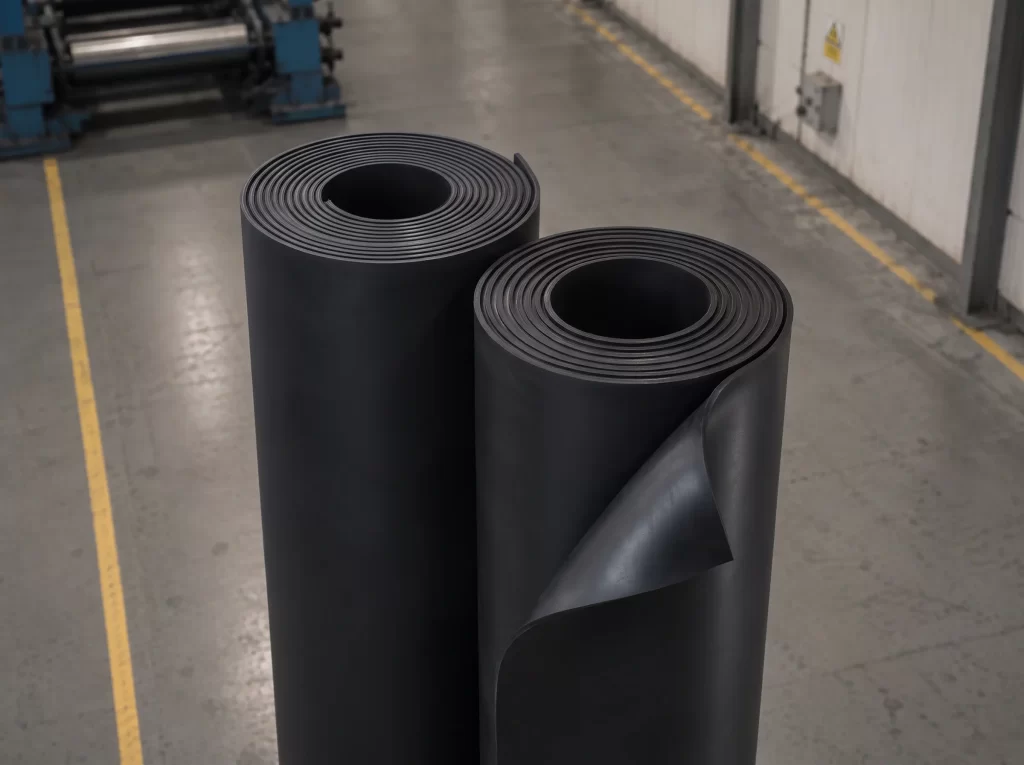
Isobutylene Isoprene Rubber (IIR) is a synthetic elastomer engineered for exceptionally low gas and vapour permeability. Its tightly packed molecular structure restricts gas and moisture diffusion far more effectively than general-purpose elastomers, ensuring containment integrity across demanding processing environments.
Beyond its role as a gas impermeable rubber sheet, IIR provides high chemical stability when exposed to concentrated acids, alkalis, and polar solvents. This balance of low permeability and chemical endurance makes butyl rubber sheet an ideal selection for process vessel linings, pipeline seals, and containment barriers throughout the petrochemical and pharmaceutical sectors.
Industrial Applications
- Chemical processing tank linings and vessel protective barriers
- Acid-resistant pipeline gaskets for aggressive media transfer
- Gas containment diaphragms and flexible expansion membranes
- Vacuum sealing sheets designed for low-pressure systems
- Pharmaceutical seals requiring inert, low-leaching contact faces
- Water-containment barriers and industrial reservoir lining systems
Key Technical Properties
- Ultra-Low Permeability: Exceptional low permeability elastomer structure minimizes nitrogen, air, and moisture diffusion rates.
- Acid Resistance: Maintains structural integrity in contact with concentrated sulfuric and hydrochloric acids.
- Alkali Stability: Performs reliably against aggressive alkalis, including sodium hydroxide solutions.
- Solvent Compatibility: Resists attack from polar solvents such as ketones, esters, and alcohols.
- Environmental Endurance: Resists degradation from ozone, UV exposure, and severe weathering.
- Thermal Range: Operates continuously between -40°C and +120°C without mechanical embrittlement.
- Hydrocarbon Limitation: Low resistance to petroleum oils and aliphatic or aromatic hydrocarbons. Not recommended for oil-contact applications.
Operational Advantages
- Ensures containment integrity across volatile gas and vapour barrier systems.
- Reduces chemical permeation rates compared to standard nitrile or SBR sheeting.
- Delivers long service life under acid and alkali exposure, reducing plant relining frequency.
- Available as a chemical resistant butyl sheet in continuous rolls and heavy plates.
- Meets versatile application demands, functioning as both flexible membranes and heavy gaskets.
Technical Specifications Table
| Property | Value |
|---|---|
| Core Polymer | Isobutylene Isoprene Rubber (IIR) |
| Hardness | 65 ± 5 Shore A |
| Tensile Strength | ≥ 7.5 MPa |
| Elongation at Break | ≥ 300% |
| Operating Temperature | -40°C to +120°C |
| Gas Permeability | Ultra-low nitrogen/air diffusion rate |
| Plate Thickness Range | 2 mm to 50 mm |
| Roll Widths | 1000 mm / 1200 mm / 1500 mm |
Installation and Material Handling Guidelines
Fabricators should cut butyl rubber gaskets using clean, dedicated tooling. Contamination from oil or hydrocarbon residues must be avoided, as petroleum solvents degrade the polymer face.
When specifying material based on butyl rubber plate specifications, confirm exact fluid concentrations and working temperatures, as chemical resistance varies under thermal stress. Surfaces must be degreased prior to bonding or mechanical clamping to ensure long-term joint integrity. These specifications reflect Rubbersan’s industrial IIR rubber roll manufacturing standards.