
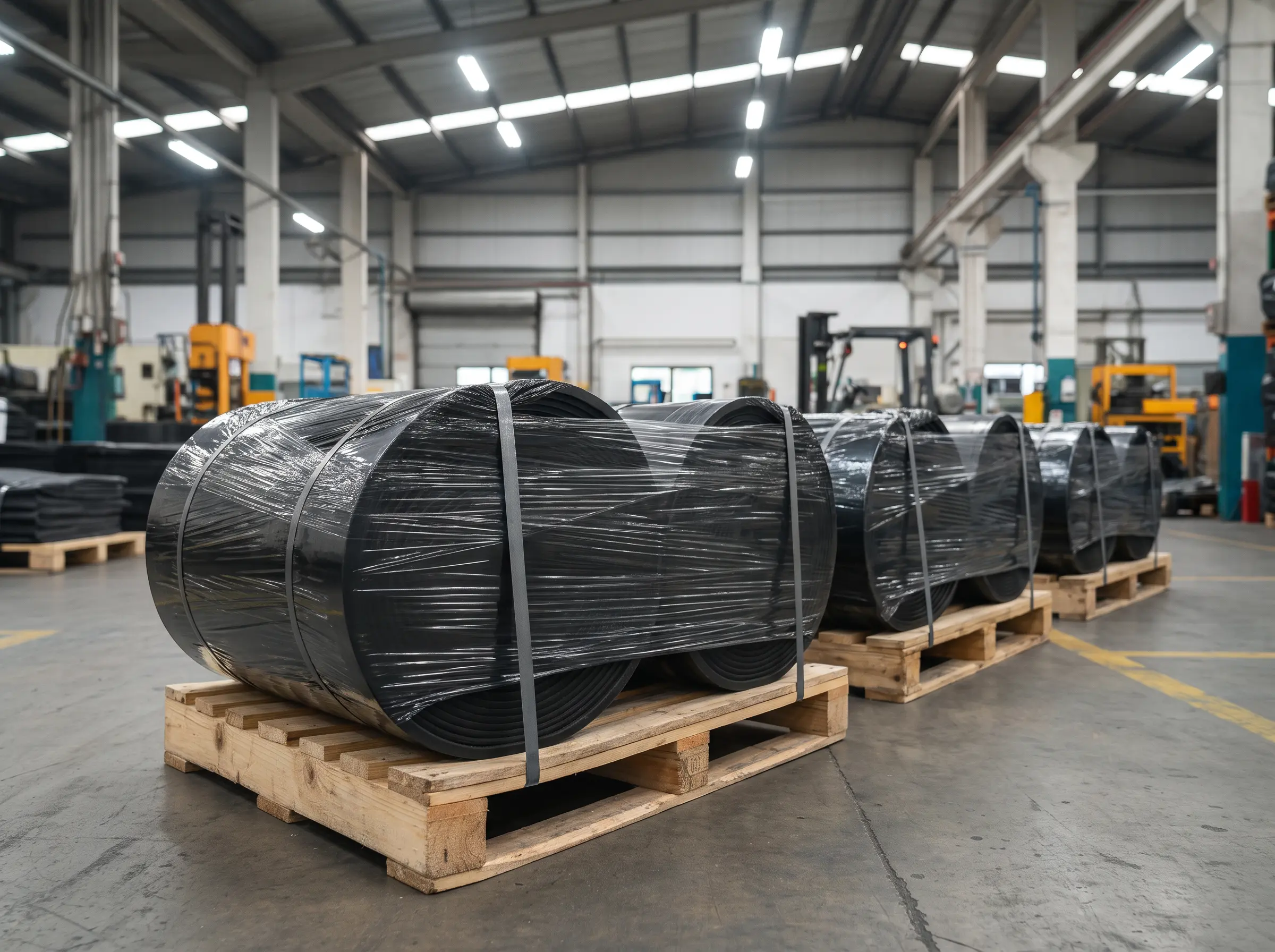
Butyl rubber sheet waterproofing relies on the molecular structure of Isobutylene Isoprene Rubber (IIR), a cross-linked polymer with tight chain packing. This structure restricts the passage of gas and water vapour molecules far more effectively than open-structure elastomers, making butyl sheet a primary material for waterproofing, gas containment, and chemical lining across industrial facilities.
This article covers the polymer physics behind butyl’s impermeability, core applications in reservoir lining and gas barrier systems, installation practices including self-adhesive butyl rubber sheet variants, and the specification data needed to select the correct grade and thickness.
Polymer Physics of Low-Permeability Elastomers
IIR’s low gas diffusion rate comes from its saturated backbone and low degree of unsaturation compared with general-purpose rubbers. Fewer reactive sites mean fewer pathways for gas molecules and moisture to migrate through the material, giving butyl a diffusion rate significantly lower than EPDM or neoprene under equivalent thickness.
This same molecular tightness gives butyl an advantage in severe chemical immersion. Where EPDM or neoprene may swell or degrade under prolonged exposure to certain acids, alkalis, or polar solvents, butyl’s low permeability limits fluid ingress into the polymer matrix, helping it maintain dimensional stability and barrier performance over extended service periods. This is the mechanical basis for describing butyl as a gas impermeable rubber sheet: it is structurally resistant to permeation itself.
Industrial Applications in Waterproofing and Containment
Butyl’s permeability performance translates into two broad application categories: liquid containment and gas barrier systems.
Chemical Basins and Reservoir Linings
As a butyl rubber pond liner or chemical basin lining, sheet is installed across primary and secondary containment pits, evaporation basins, and process water reservoirs. Typical uses include:
- Primary and secondary chemical containment pits
- Industrial pond liners for evaporation basins and process water reservoirs
- Roof membrane waterproofing on flat or low-slope structures
- Sub-grade tanking membranes for below-ground structures
In these applications, zero-permeation performance protects surrounding soil and groundwater from contamination while resisting degradation from the contained media itself.
Gas Barrier Membranes and Sub-Grade Sealing
Beyond liquid containment, butyl sheet functions as a gas diaphragm and barrier membrane in applications where vapour migration must be controlled. Common installations include:
- Gas diaphragms in process equipment
- Radon and methane barrier systems beneath building slabs
- Vacuum sealing membranes in low-pressure systems
- Sub-grade sealing layers combined with drainage systems
As an industrial IIR containment barrier, butyl sheet is typically installed as a continuous membrane with sealed seams, since the integrity of the barrier depends on eliminating gaps as much as on the material itself.
Key Material Specifications and Thermal Limits
Selecting the correct material requires evaluating key physical metrics against site requirements. Essential butyl rubber specification data includes:
- Hardness: 65 ± 5 Shore A — firm enough for handling and seaming, flexible enough to conform to substrate irregularities
- Tensile strength: ≥ 7.5 MPa — supports resistance to puncture and stress at anchor points and seams
- Elongation at break: ≥ 300% — allows the membrane to accommodate substrate settlement and thermal movement without tearing
- Operating temperature range: -40°C to +120°C — suitable for both buried and exposed installations across variable climates
- Roll widths: 1000 mm, 1200 mm, and 1500 mm continuous rolls, reducing the number of field seams required
- Thickness range: 2 mm to 50 mm plates and sheet, selected according to hydrostatic head, gas pressure, or mechanical exposure
Installation Guidelines and Seaming Techniques
Correct installation depends on substrate preparation and seam quality as much as material selection.
- Prepare substrates so they are clean, dry, and free of sharp protrusions before sheet placement.
- Overlap seams to the manufacturer’s specified minimum width to maintain continuous barrier performance.
- Use self-adhesive butyl rubber sheet variants for rapid seam overlapping and sub-grade membrane installation where hot-bonding equipment is impractical.
- Roll seams firmly after adhesion to eliminate trapped air and ensure full contact pressure.
- Protect exposed membrane edges and terminations with mechanical fastening or edge trim to prevent moisture ingress at boundaries.
Operational Longevity and Maintenance Factors
Butyl lining and membrane systems generally require minimal maintenance once correctly installed, given their resistance to ozone, UV, and weathering. Periodic inspection should focus on seam integrity, mechanical damage from foot or vehicle traffic, and any signs of substrate movement that could stress anchor points. Because butyl’s chemical resistance profile excludes petroleum oils and aromatic hydrocarbons, sites with mixed chemical exposure should confirm compatibility before specifying butyl over an alternative lining material.
Technical Consultation and Material Selection
Selecting the correct butyl grade, thickness, and installation method depends on the specific containment load, chemical exposure, and substrate conditions on site. These specifications reflect Rubbersan’s manufacturing standards for industrial IIR sheet and lining systems.