
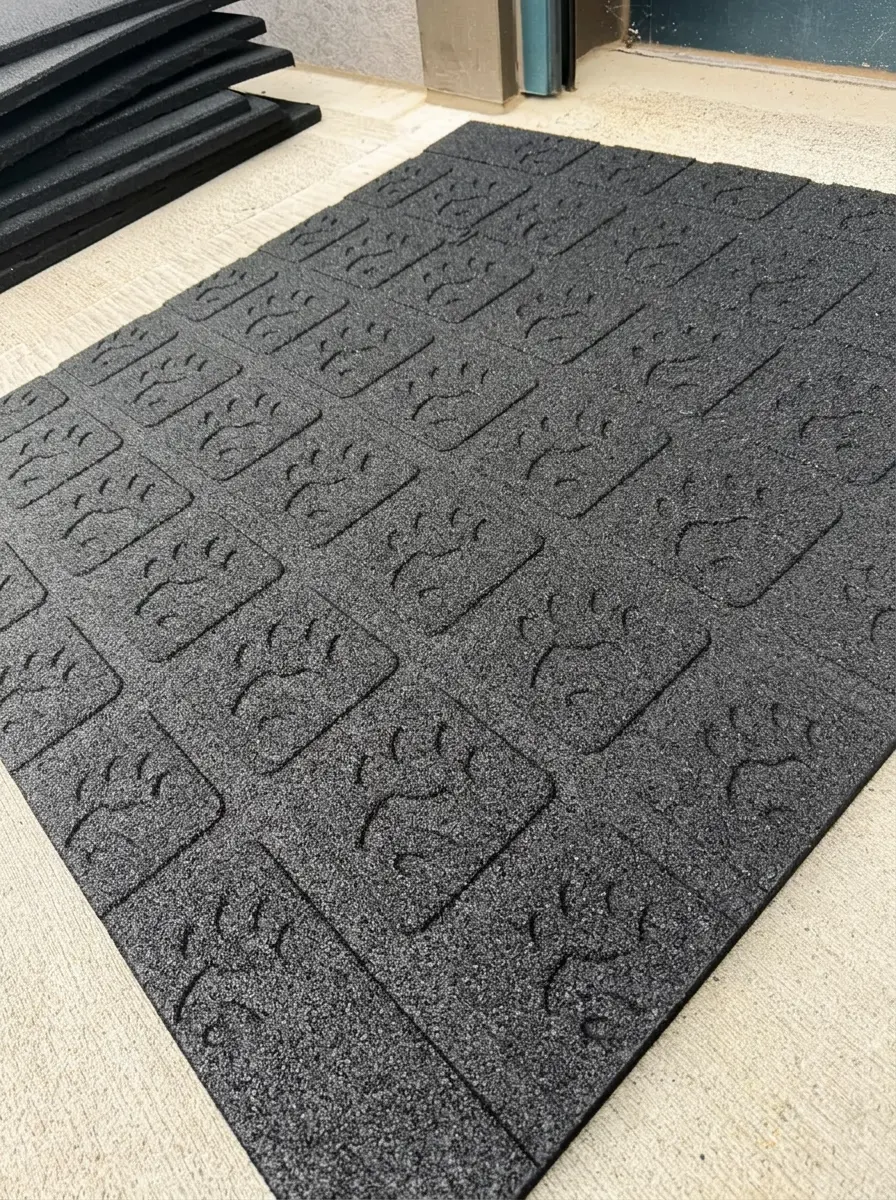
Essential Impact on Livestock Hygiene and Disease Control
Concrete is porous. Under microscopic examination, its surface contains tiny capillaries that absorb liquids.
In animal housing, this creates a persistent technical problem. Urine, waste fluids, and washdown water penetrate the subfloor surface instead of draining away.
Waterproof rubber flooring solves this issue at the material level. Vulcanised rubber sheeting forms a closed, non-porous barrier. This keeps fluids on the surface, where they can be drained, mopped, or hosed away easily.
Floor hygiene in these settings directly affects bacterial load and animal health. It also impacts the overall cost of sanitation routines. This article covers how non-porous rubber protects livestock, equine, and veterinary facilities.
The Physics of Non-Porous Vulcanised Rubber
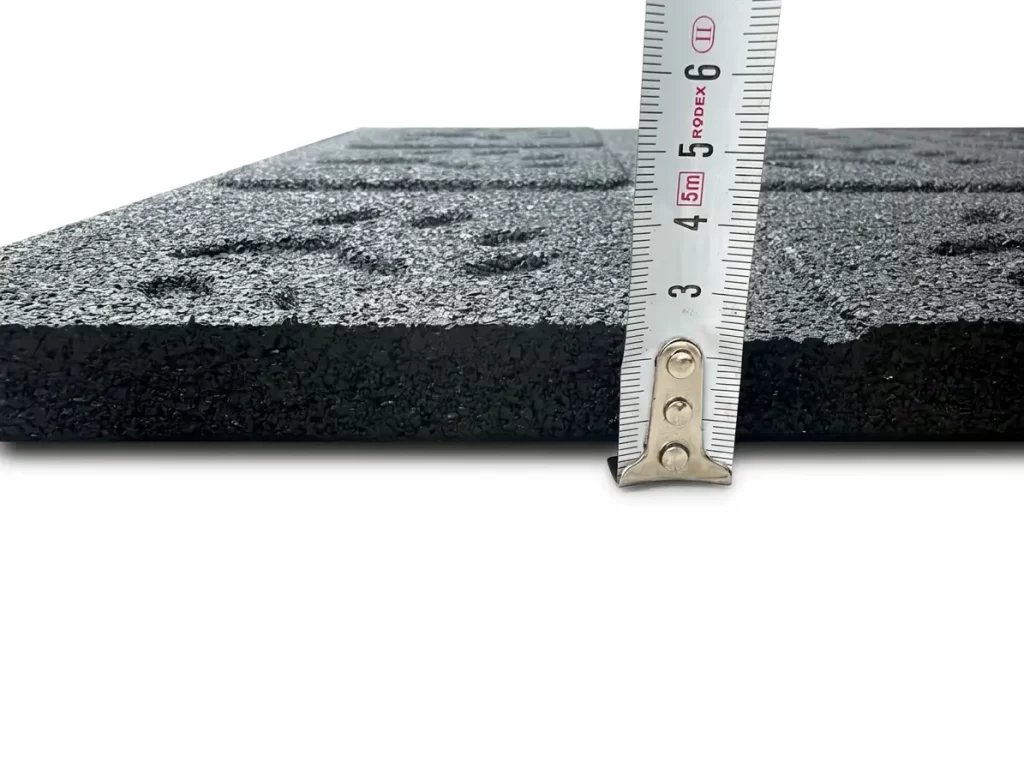
Vulcanisation cross-links rubber polymer chains into a dense network. This process closes the internal structure of the material. It removes the open capillary pathways found in porous concrete.
The result is a hydrophobic surface. Liquids form droplets on top of the material rather than soaking into it. Non-porous rubber mats keep urine and washdown fluids at the surface for quick removal.
This impermeability is consistent throughout the entire mat thickness. Vulcanised rubber maintains hydrophobic performance even after heavy surface wear.
Disease Control and Pathogen Mitigation
Bacteria require moisture to multiply. Porous subfloors provide trapped fluids, organic material, and shelter for bacteria. Disease control flooring works by removing moisture from the environment.
Ammonia build-up follows the same pattern. Absorbed urine causes ammonia gas to release long after cleaning. Non-porous rubber limits absorption, so ammonia levels depend only on drainage frequency.
Livestock Housing
Damp porous flooring causes elevated hoof infection rates in cattle housing. Livestock hygiene improves when flooring sheds fluids quickly. This reduces the time hooves spend in contact with contaminated moisture.
Equine Stables
Standing urine on porous stable floors softens hooves and causes skin irritation. Equine rubber matting provides a non-porous surface. Combined with good drainage, it keeps direct fluid contact to a minimum.
Veterinary Recovery
Veterinary facilities require surfaces that support strict anti-bacterial standards. Non-porous rubber allows thorough disinfection without leaving residual contamination trapped beneath the surface.
Sanitation Efficiency and Chemical Resistance
Non-porous rubber is compatible with standard agricultural disinfectants and detergents. The surface does not absorb these agents. Therefore, cleaning solutions remain fully active on the surface.
Washdown procedures are significantly faster. Fluid moves directly to drainage points without soaking in. This reduces both water usage and labor time per cleaning cycle.
Floor slope remains important. Non-porous flooring works best when paired with adequate drainage falls. Proper layout prevents liquids from pooling on the flat surface.
Long-Term Operational Durability
Beyond hygiene, non-porous rubber flooring provides key mechanical benefits:
- Wear resistance: Maintains structural integrity under heavy hoof and claw traffic.
- Impact cushioning: Reduces joint and hoof pressure compared to bare concrete.
- Thermal insulation: Limits heat loss to the subfloor in cold housing.
- Anti-slip performance: Maintains reliable traction even after years of daily washing.
These properties lower floor replacement frequency and reduce facility operational disruptions.
Technical Facility Guidelines
Installation quality directly affects long-term hygiene performance. Subfloors must be level and properly drained before laying rubber. Seams between mats or sheets should be sealed tightly to stop fluid penetration.
Edge trims and wall junctions also require proper sealing. Gaps at these points are common entry routes for moisture. These technical standards guide Rubbersan’s approach to livestock and veterinary flooring specification.