
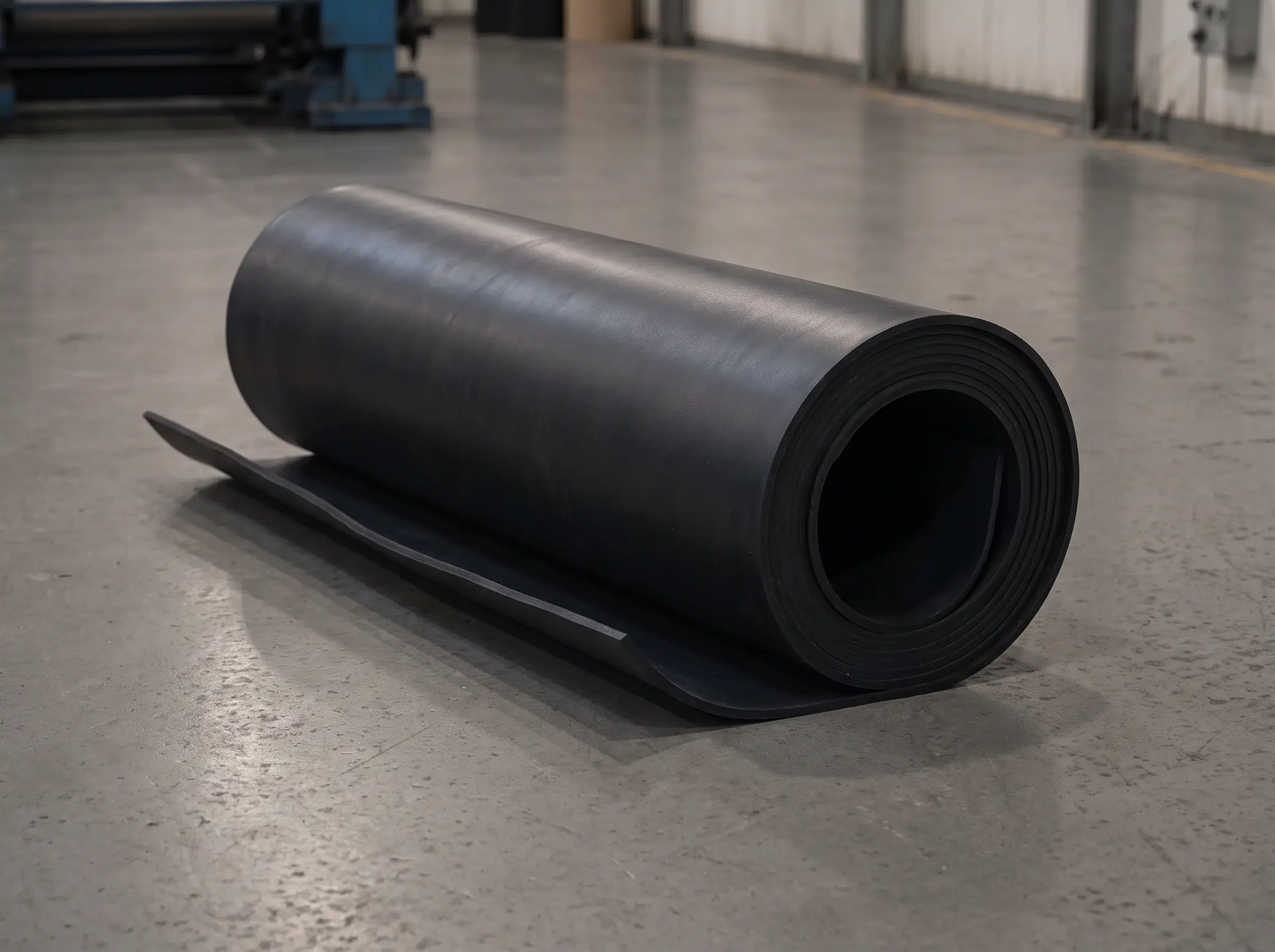
How Chloroprene Elastomers Protect Heavy Machinery and Infrastructure in Marine and Industrial Environments
Vibration damping and sealing performance both depend on material behaviour under sustained load, thermal cycling, and chemical exposure. Neoprene rubber pads and gaskets are specified across these roles because chloroprene rubber maintains predictable compression recovery and sealing characteristics across demanding operational ranges, from engine rooms to open dockside infrastructure.
Polymer Mechanics in Vibration Isolation and Sealing
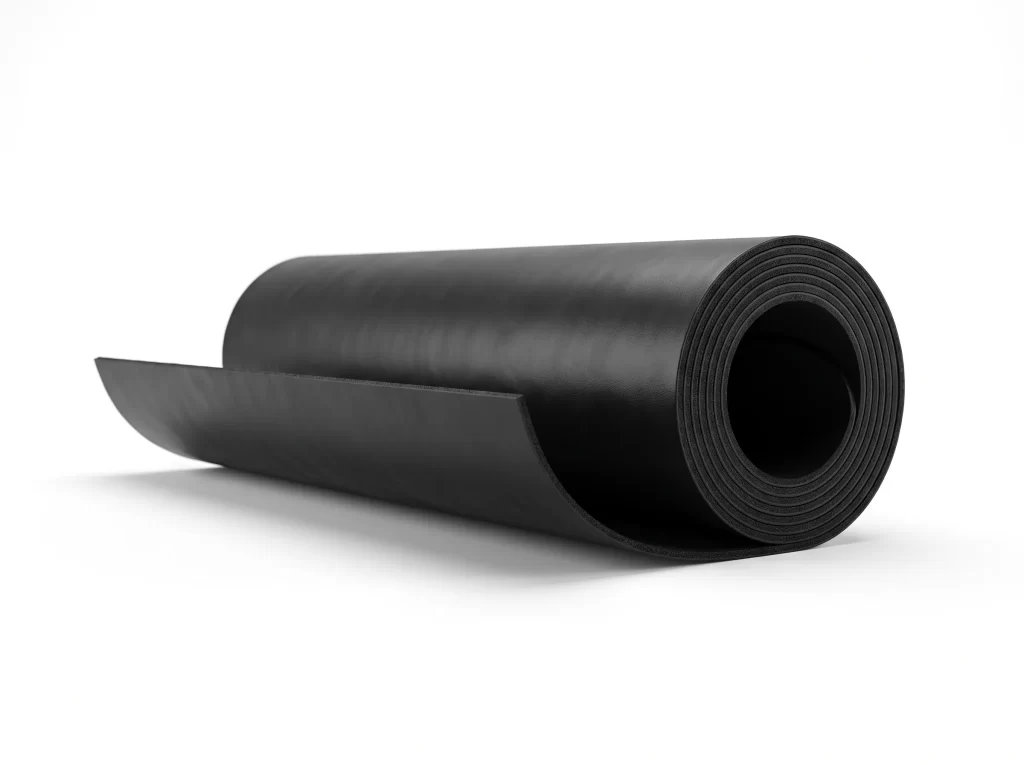
An industrial neoprene pad absorbs kinetic energy through controlled elastic deformation. When dynamic machinery vibration or shock load is applied, the polymer’s closed molecular structure compresses and recovers, dissipating mechanical energy rather than transmitting it into concrete foundations or steel support frames.
This same elastic memory makes neoprene rubber gasket material effective under variable flange pressures. Under bolt torque, the compound conforms to surface irregularities and maintains continuous contact as structural joint surfaces expand, contract, or shift during operation.
High-grade chloroprene rubber relies on a stable polymer backbone that resists oxidation and crystallisation far better than general-purpose elastomers. The compound retains flexibility at low ambient temperatures and resists thermal softening at elevated operating levels, ensuring that baseline neoprene rubber sheet specifications remain stable from cold storage areas to heated process plants.
Load Bearing and Sealing Applications in Heavy Industry
Neoprene’s balance of mechanical damping, fluid resistance, and weatherability supports a wide range of structural load-bearing and sealing duties.
Machine Mounting and Shock Isolation
Vibration damping rubber pads are installed beneath pumps, compressors, generators, and heavy rotating equipment to isolate structural vibration and protect mounting hardware from dynamic fatigue. Typical engineering deployments include:
- Engine mounts and heavy generator base pads
- Structural bridge and viaduct bearing pads
- Industrial compressor and process pump isolation pads
- Machinery leveling layers and shock absorption mounts
Pad thickness and durometer are selected based on equipment mass and operating frequency. Thicker neoprene rubber pads are required under high static mass to prevent bottoming out, while moderate thicknesses isolate higher frequency rotational vibration efficiently.
Marine Flanges and Pipeline Infrastructure
Marine sealing gaskets are fabricated from continuous sheet to seal hull penetrations, fluid transfer lines, and storage vessels exposed to salt spray and fuel vapors. Standard installations cover:
- Pipeline and flange gaskets across fuel and water lines
- Hull penetrations and deck seals
- Petrochemical storage tank sealing rings
- Valve body and manifold gaskets on marine equipment
For flange sealing, gasket thickness is typically kept thinner than damping pads (2 mm to 6 mm) to minimise creep relaxation while enabling the rubber to conform under bolt load.
Engineering Specifications and Selection Criteria
Material selection must rely on verified test standards rather than general material descriptions. Critical metrics within neoprene rubber sheet specifications include:
- Hardness: 60 ± 5 Shore A (ASTM D 2240). A balanced mid-range durometer providing necessary compressibility for fluid seals alongside compressive strength for load pads.
- Tensile Strength: ≥ 8 MPa (ASTM D 412). Ensures structural integrity under high bolt torque and dynamic shear stress.
- Elongation at Break: ≥ 250% (ISO 37). Confirms material flexibility and resistance to tearing during installation and thermal movement.
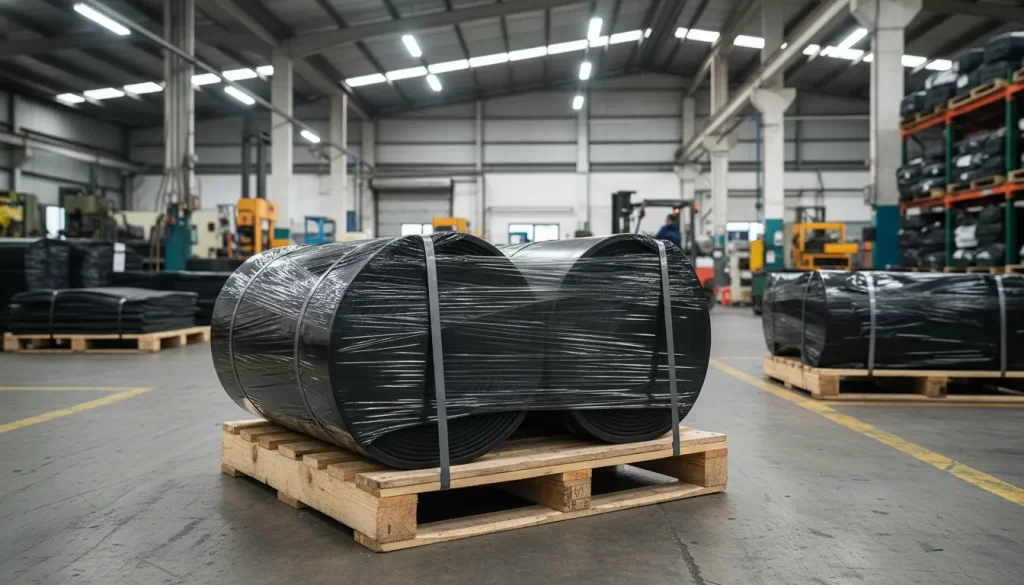
- Supply Dimensions: Available in continuous rolls at 1000 mm, 1200 mm, and 1500 mm widths, as well as heavy plates from 2 mm up to 50 mm thick.
As a general specification rule, thinner gauges (2 mm to 6 mm) suit flat flange seals where sealing force must be concentrated. Thicker plates (10 mm and above) are required for heavy machinery vibration pads where compressive deflection and shock absorption take priority.
Chemical and Environmental Resistance Profile
Industrial and offshore operations expose elastomer components to simultaneous chemical, thermal, and atmospheric stresses. Chloroprene exhibits a broad resistance spectrum across these vectors:
- Oils and Fuels: Maintains structural stability when exposed to mineral oils, lubricants, and aliphatic hydrocarbons.
- Ozone and Weathering: Tested under ISO 1431-1 with no surface cracking under sustained ozone exposure, supporting long-term outdoor dockside use.
- Seawater Corrosion: Resists chemical degradation from prolonged saltwater immersion, essential for marine hull seals.
- Fire Safety: Natural flame retardant rubber sheet formulations exhibit self-extinguishing properties, meeting fire safety standards in enclosed engine spaces.
- Thermal Range: Operating stability spans from -30°C up to +120°C.
Precision Fabrication and Installation Guidelines
Custom neoprene gasket fabrication typically uses sheet or roll stock processed via CNC waterjet cutting or precision die-cutting to match engineering drawings. To ensure long-term performance:
- Verify bolt hole centers and pitch circle diameters on joint drawings before cutting to avoid stress points from misalignment.
- Match gasket thickness to flange face finish and available bolt torque, as over-compressing thin gaskets can induce premature mechanical breakdown.
- Size the surface area of an industrial neoprene pad based on calculated static weight and peak dynamic loads, rather than simply copying the footprint of the machine leg.
- Ensure uniform pad thickness across all mounting points under a single machine base to prevent frame twisting or uneven load transfer.
- Store cut gaskets away from direct heat and ozone sources prior to installation to maintain factory physical properties.
Technical Specification and Supply
Achieving reliable seal integrity and vibration isolation requires matching durometer, thickness, and chemical resistance to the precise environmental demands of the installation. These technical parameters reflect Rubbersan’s neoprene manufacturing standards for industrial and marine applications.