
In loading bays, every contact between a vehicle and the dock structure transfers kinetic energy. The impact forces generated when lorries and trucks reverse into position create dynamic loads. These loads are rarely included in static structural calculations, yet they cause cumulative damage over time. Without effective loading bay protection, this energy transfers directly to concrete walls, steel frames, or vehicle bodies. This guide examines the mechanical causes of loading dock damage and the technical criteria for selecting the correct heavy-duty dock bumper.
Loading Bay Protection and Shock Absorption Mechanisms
The force generated when a lorry approaches a loading dock depends on its mass and speed. When this force hits a hard surface without cushioning, the energy discharges through localized structural stress rather than bouncing back. As a result, concrete corners crack, steel frame joints bend at a microscopic level, and vehicle rear bumpers suffer permanent deformation.
A rubber dock bumper acts as an intermediate component that absorbs this energy through elastic deformation. For instance, a 100 mm thick elastomeric rubber core compresses upon impact. Consequently, it converts most of the kinetic energy into heat through internal friction. Thanks to this mechanism, energy does not transfer instantaneously at a single point. Instead, it dissipates gradually over time. Therefore, extending the duration of the impact significantly reduces the peak force transmitted to the building structure.
Why Choose a Rubber-Steel Hybrid Structure? (10 mm Steel Plate Advantage)
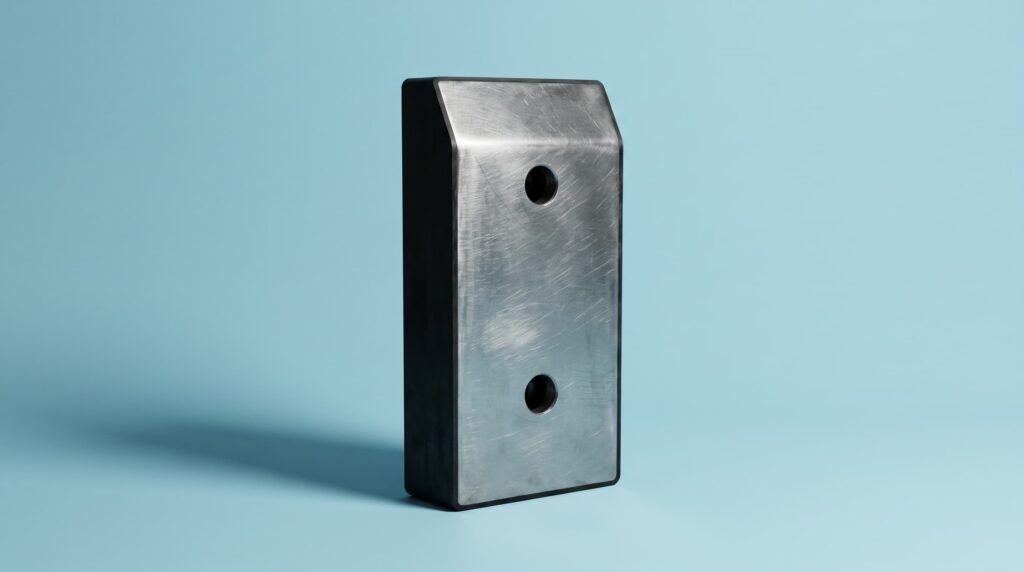
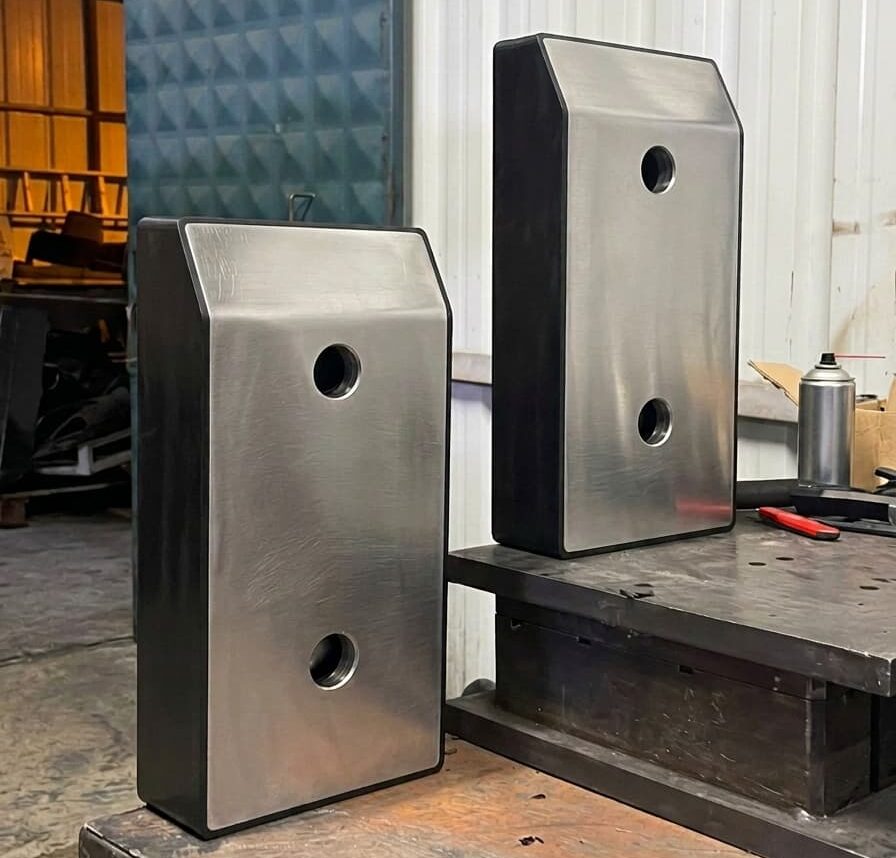
Pure rubber blocks tend to suffer from surface depression and edge tearing under repetitive heavy loading. To solve this problem, heavy-duty dock bumpers feature 10 mm thick steel plates on their top and bottom surfaces. Solutions such as the 100 × 250 × 500 mm rubber dock bumper use a rubber-steel hybrid structure that performs three vital functions simultaneously:
- Load distribution: The steel plate prevents impact force from concentrating on a single point. Instead, it distributes the force evenly across the entire surface of the rubber core, reducing point stress on the concrete.
- Structural stabilization: The plate ensures the rubber core maintains its shape during installation and throughout its service life. This limits lateral movement and deformation.
- Connection integrity: Vulcanisation or mechanical fastening minimizes the risk of separation at the rubber-to-metal interface. This is crucial because many site failures stem from this interface loosening over time.
Ultimately, a structure reinforced with 10 mm steel plates offers a far more predictable and longer performance curve than single-piece rubber blocks.
Key Dock Bumper Selection Criteria for Industrial Sites
Selecting the correct dock bumper for loading bay safety depends on traffic density and site conditions. Therefore, facility managers should evaluate the following criteria:
- Vehicle traffic volume: Loading bays that handle high daily vehicle volumes require steel-plated bumpers with thicker rubber cores.
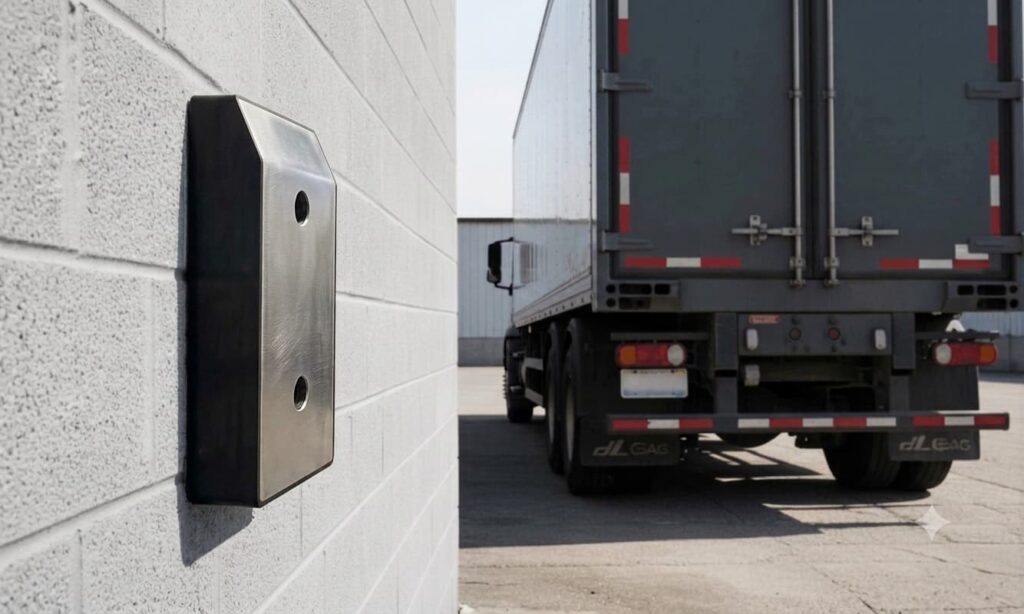
- Dock structure: Concrete docks require wide contact surfaces to reduce point loads, whereas steel constructions require mounting hole patterns that match the frame geometry.
- Vehicle type and chassis height: Standard dimensions, such as a 500 mm height, must accommodate various lorry and trailer chassis geometries. If the bumper alignment does not match the chassis height, the impact transfers directly to the vehicle body.
- Environmental conditions: In cold storage facilities, the rubber compound must retain its elasticity at low temperatures. Furthermore, outdoor ports require corrosion-resistant steel plates.
- Ease of installation: Pre-drilled holes suitable for anchor bolts reduce installation time and minimize fitting errors on site.
Long-Term Dock Safety and Maintenance Advantages
Loading bay maintenance costs rarely arise from a single major accident. Instead, they stem from the accumulation of small, unnoticed impacts. For example, a hairline crack in a concrete corner gradually expands over time. Similarly, slight bending in steel frames loosens fasteners. However, a correctly dimensioned rubber-steel hybrid bumper slows down this cumulative damage process and extends the structural lifespan of the dock.
Using a heavy-duty dock bumper offers several practical benefits:
- It prevents concrete surface cracking and spalling.
- It reduces the risk of loosening or bending in steel frame connections.
- It minimizes repetitive impact damage to the rear bodywork of lorries.
- It significantly extends bumper replacement intervals compared to low-grade alternatives.
Consequently, maintenance teams should inspect bumper wear, check for interface loosening between the steel plate and rubber, and verify bolt tightness during routine maintenance. If the rubber body exhibits a compression set exceeding 20%, the bumper must be replaced to maintain optimal shock absorption performance.
Technical Support and Site Solutions
Loading bay geometries and vehicle traffic vary from site to site. Therefore, standard dimensions may not fit every facility perfectly. Basing your rubber dock bumper selection on actual site data is essential for long-term loading bay safety. Facilities seeking technical drawings or custom dimension support can contact the Rubbersan engineering team directly.