
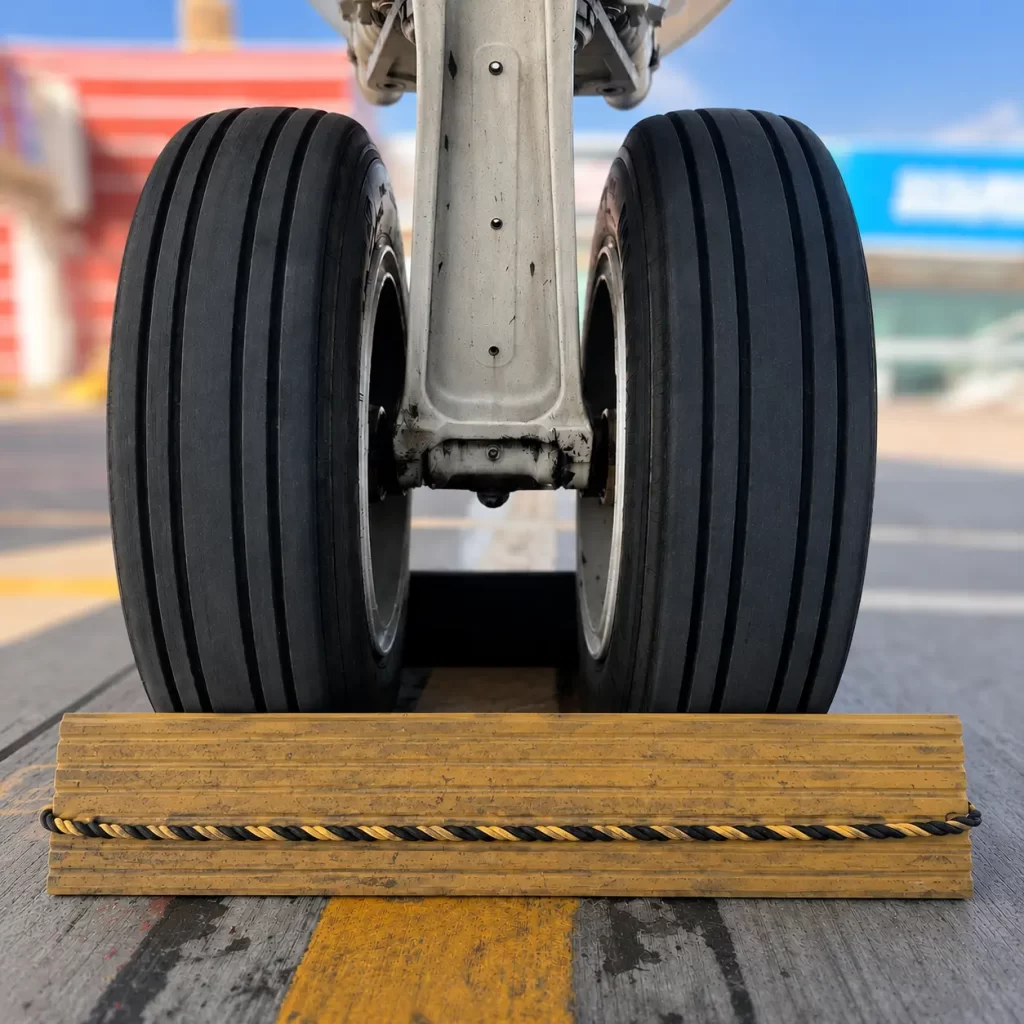
In aviation, serious incidents do not always begin with complex technical failures. Quite often, they start on the ground with something far more ordinary: an aircraft that was not properly secured during parking, maintenance, fuelling, or loading operations.
A wheel chock may seem like a simple piece of ground equipment, yet its role is critical. If it fails under load, shifts on the apron, or deteriorates prematurely, the consequences can range from damaged equipment and delayed operations to genuine safety hazards for ground personnel.
This is precisely why high-quality rubber aircraft chocks should never be treated as low-priority consumables. Whether securing a light training aircraft or a fully loaded Airbus or Boeing, the reliability of the restraint system directly affects operational safety, compliance, and long-term operating costs. Selecting the right geometry and material compound is an operational requirement that directly impacts the ground handling efficiency of any aviation hub.
Why Inferior Aircraft Chocks Become a Safety Risk
Many wheel chocks available on the market are produced with generic rubber compounds that simply are not designed for harsh aviation conditions. On paper they may appear suitable, but prolonged exposure to airport ramps quickly reveals their limitations.
Aircraft chocks routinely operate in environments exposed to:
- Jet fuel and hydraulic fluids
- UV radiation and ozone
- Heavy static loads
- Abrasive apron surfaces
- Moisture and de-icing chemicals
- Significant temperature variation between seasons
Poor-quality products tend to develop surface cracking, compression deformation, loss of friction, brittle edges, and reduced structural stability. In practical terms, this means reduced wheel restraint performance exactly when reliability matters most. For airport operators, MRO facilities, and handling companies, the real cost of inferior chocks is not the purchase price; it is the repeated replacement cycle, operational disruption, and unnecessary exposure to avoidable safety risks.
Heavy-Duty Triangular Rubber Chocks Designed for Real Aviation Conditions
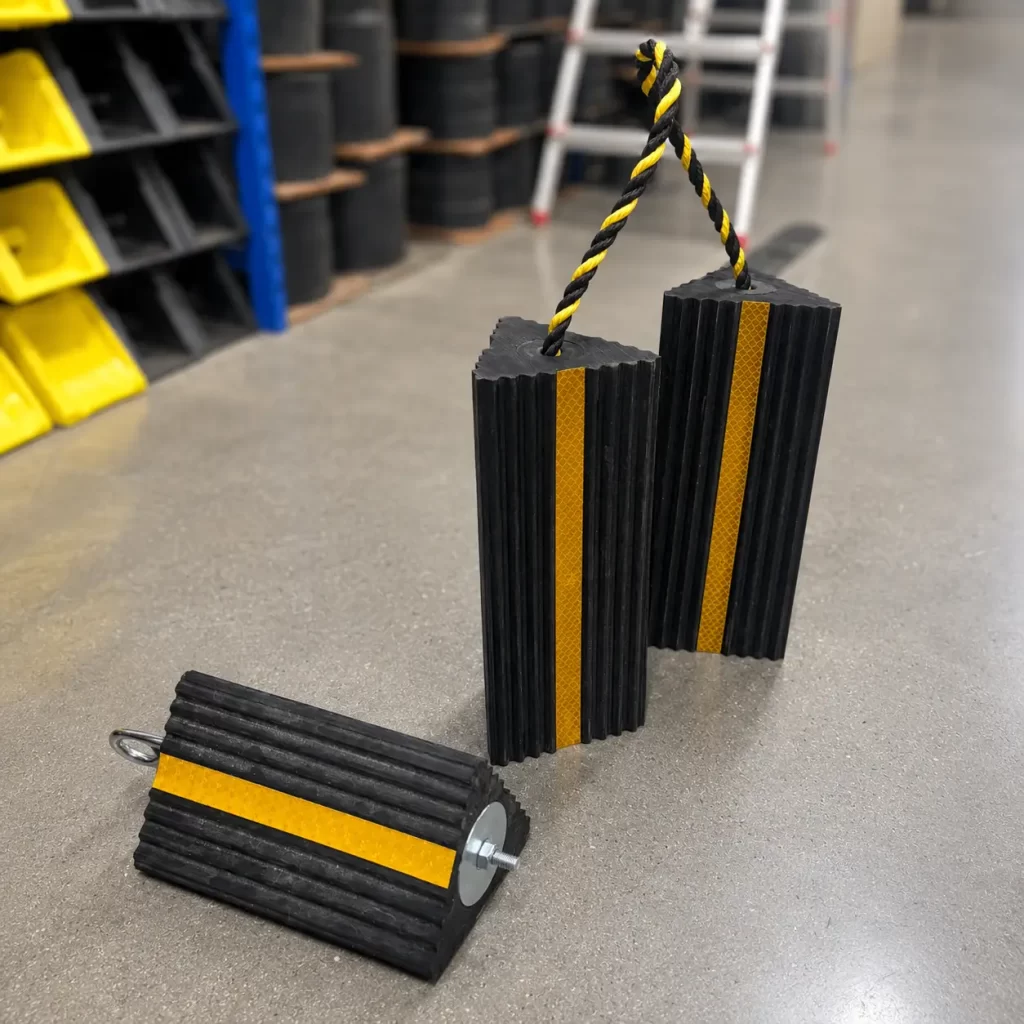
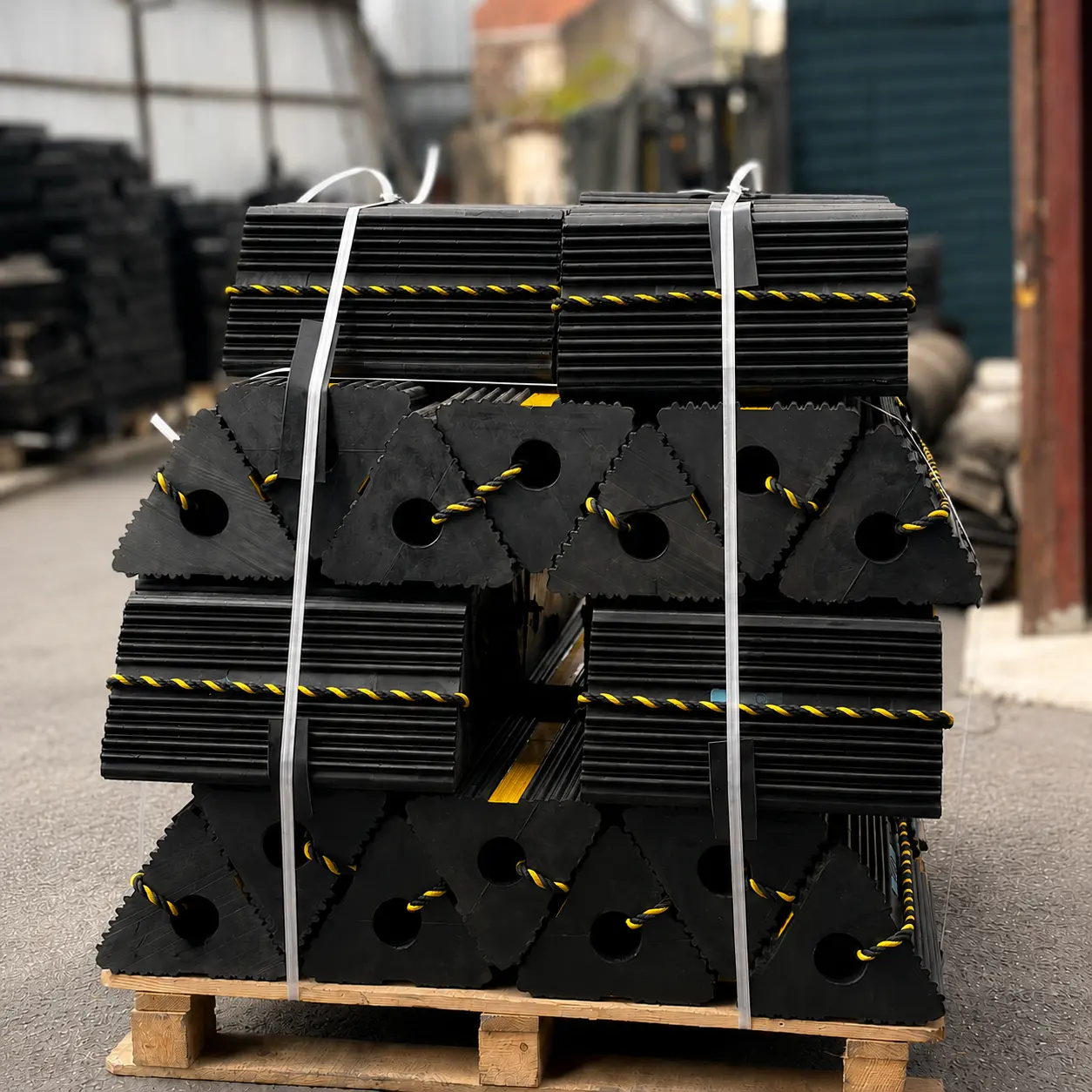
The geometry and material composition of a wheel chock play a far greater role than many procurement teams initially realise. Premium industrial manufacturers produce heavy-duty triangular rubber chocks specifically engineered to maintain stability under continuous operational use.
The triangular profile is backed by physics: it improves wheel contact and distributes weight and pressure more effectively, particularly on uneven or sloped apron surfaces. Compared with lightweight or hollow alternatives, solid rubber construction offers greater resistance to displacement, improved ground grip, better load distribution, and increased stability during adverse weather conditions.
These commercial aircraft wheel chocks are engineered to support international fleets, including:
- Boeing aircraft and Airbus fleets
- Regional jets and business aviation
- Cargo aircraft and heavy ground support equipment
- Flight training aircraft
The same engineering principles apply equally to training aircraft chocks, where reliability remains essential despite lower operating weights. Companies like Rubbersan specialize in adapting these solid triangular geometries to fit both commercial giants and flight school fleets worldwide.
Reflective Aviation Chocks Improve Ramp Visibility and Ground Safety
Visibility on the apron becomes increasingly important during night operations, poor weather, or busy turnaround periods. Reflective aviation chocks are designed with highly visible elements to improve identification during low-light operations. This drastically reduces the likelihood of ground equipment being overlooked, ramp vehicle contact, delays caused by misplaced chocks, and hazards during aircraft repositioning. For ground crews working under time pressure, high visibility is part of maintaining a controlled and safe operational environment.
Custom Aircraft Chocks for Different Climates and Operational Demands
No two operating environments are identical. A compound that performs well in Northern Europe may not offer the same durability under Middle Eastern heat or coastal humidity. This is where properly engineered custom aircraft chocks become valuable. As an experienced aircraft chocks manufacturer, Rubbersan can tailor technical specifications including rubber compound formulation, Shore A hardness, density, dimensions, and reflective configurations depending on specific client tenders.
In aviation applications, the rubber compound determines the true working life of the product. Depending on operational requirements, compounds can be formulated for enhanced UV resistance, oil and fuel resistance, low-temperature flexibility, and high-temperature stability. For example, airports in colder climates require compounds that remain flexible at low temperatures to prevent cracking, while hot-climate operations benefit from improved UV protection. These engineering details have a direct impact on product lifespan and replacement frequency.
Aviation Wheel Chocks Wholesale: Looking Beyond Unit Price
In aviation procurement, focusing solely on initial purchase cost is rarely economical. Low-grade wheel chocks lead to frequent replacement orders, higher maintenance consumption, and increased safety exposure.
When sourcing aviation wheel chocks wholesale, procurement managers should look beyond the unit price and assess compound quality, manufacturing consistency, load-bearing capability, and international logistics support. A properly manufactured rubber aircraft chock can remain operationally reliable for years under continuous use, significantly reducing the total cost of ownership over time.
Turkey has become an increasingly important manufacturing base for industrial rubber products thanks to its advanced production capability, export infrastructure, and proximity to European and Middle Eastern markets. By combining industrial rubber expertise with aviation-focused manufacturing, Rubbersan supplies durable and technically engineered wheel chocks for international B2B clients operating in demanding environments.
Beyond the Apron: Making the Right Investment in Airport Ground Safety
Aircraft wheel chocks may appear straightforward, but in practice they are a critical part of ground safety procedures. Well-engineered rubber aircraft chocks provide reliable aircraft restraint, improved apron safety, and reduced long-term procurement costs.
From training aircraft chocks used in aviation schools to commercial aircraft wheel chocks supporting major airline operations, quality and compound engineering make a measurable difference. For procurement teams, maintenance departments, and aviation operators seeking dependable custom aircraft chocks or wholesale supply solutions, Rubbersan offers tailored manufacturing support for a wide range of international operational requirements.