
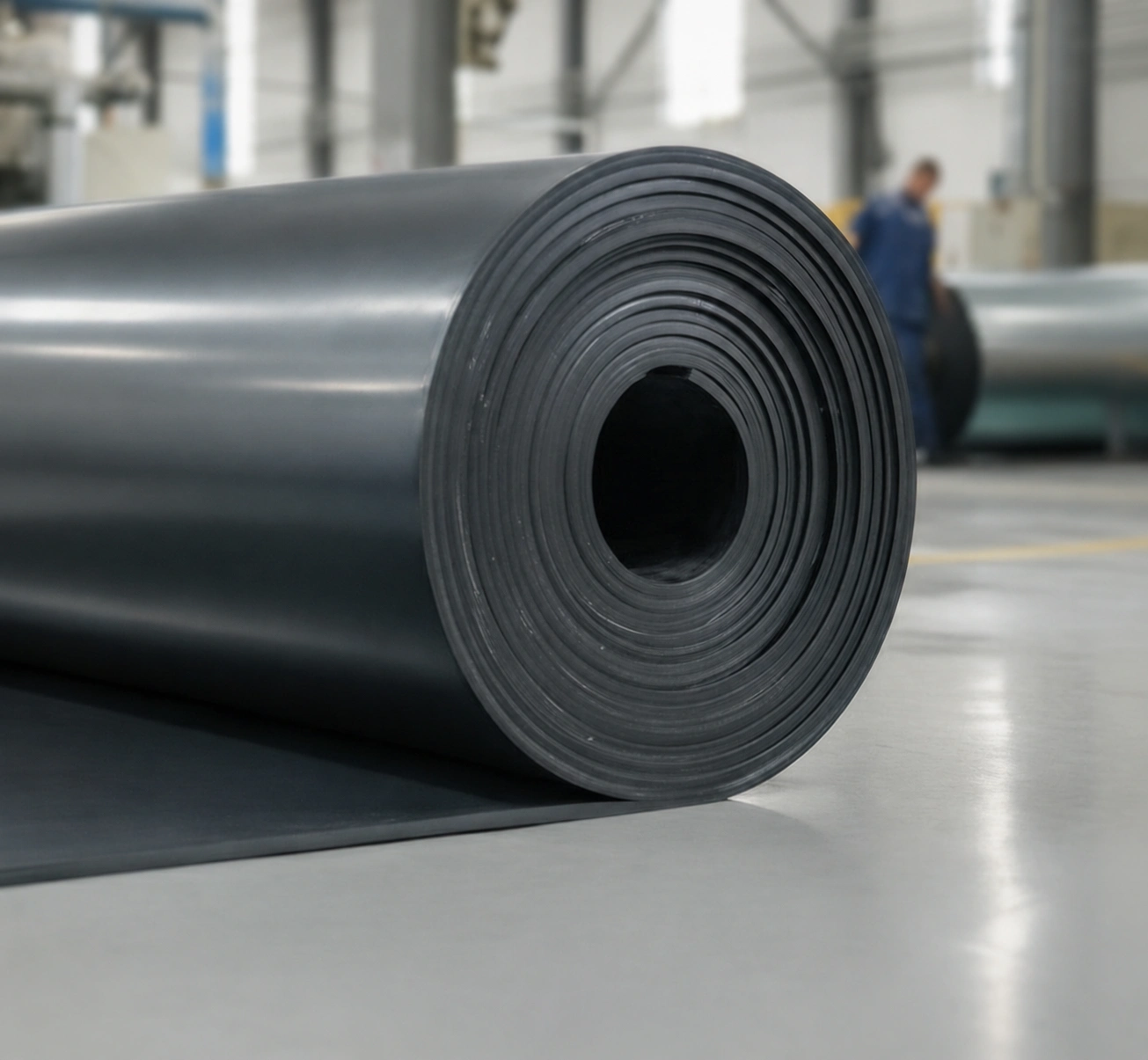
Selecting an oil resistant rubber is not a simple commodity purchase. It is a vital engineering decision that determines whether a component lasts three years or three months. This guide explains how NBR, FKM, and HNBR perform against mineral oils, synthetic lubricants, and fuels—helping you specify the right material every time.
Why Hydrocarbons Attack Rubber: Understanding Failure Modes
Oil resistance is not a single property. It is the material’s ability to resist three main failure mechanisms:
- Volume Swelling: Non-polar elastomers absorb hydrocarbon molecules. This causes the rubber to expand and soften. A gasket that swells beyond its housing tolerance will extrude or crack under pressure.
- Hardening and Embrittlement: Prolonged exposure to hot oil or aggressive fuel additives can leach essential plasticisers out of the compound. This increases Shore A hardness and lowers flexibility until the rubber cracks.
- Compression Set: This refers to the permanent deformation a seal retains after sustained compression at operating temperatures. High compression set causes seals to lose memory, leading to fluid leaks during pressure cycles.
Addressing these three mechanisms during component selection prevents premature failures on the factory floor.
NBR vs FKM Oil Resistance: Technical Comparison
Nitrile (NBR), Fluorocarbon (FKM), and Hydrogenated Nitrile (HNBR) are the three primary hydrocarbon resistance elastomers used in industrial sealing applications. Each polymer offers a distinct balance between cost and performance.
| Property | NBR (Nitrile) | HNBR | FKM (Fluorocarbon) |
|---|---|---|---|
| Operating Range | −30°C to +100°C | −30°C to +150°C | −20°C to +200°C |
| Mineral Oil Resistance | Very Good | Excellent | Excellent |
| Synthetic Lubricants | Moderate | Good | Excellent |
| Fuel & Biodiesel | Fair (swells in B100) | Good | Superior (E85 Standard) |
| Shore A Hardness Range | 60–90 | 65–90 | 60–90 |
| Compression Set Resistance | Good (below 100°C) | Very Good | Excellent (up to 150°C+) |
| Relative Material Cost | Standard / Low | Medium | High |
Nitrile Rubber (NBR)
NBR remains the benchmark choice for standard hydraulic systems, general lubrication line seals, and nitrile rubber seals operating under 100°C. Acrylonitrile (ACN) content is the critical factor: higher ACN levels improve oil resistance, while lower ACN levels preserve low-temperature flexibility.
Fluorocarbon Elastomers (FKM)
FKM excels in high-temperature, aggressive-chemical environments. It is ideal for synthetic hydraulic fluids, turbocharger seals, and high-ethanol fuel blends. Its fluorine backbone resists oxidation far beyond standard NBR. This is why FKM is widely used in aviation safety equipment and chemical processing lines where seal failure is not an option.
Hydrogenated Nitrile (HNBR)
HNBR bridges the gap between NBR and FKM. Its saturated polymer backbone offers superior heat, ozone, and H2S(sour gas) resistance. HNBR delivers compression set performance similar to FKM, but at a more competitive material cost for high-volume production.
Technical Standards: ASTM D2000 and Shore A Hardness
Generic datasheet claims are rarely enough for procurement approval. The ASTM D2000 rubber specification provides an auditable framework for classifying elastomers by heat and oil swell resistance. Specifying a formal D2000 line call-out gives buyers a clear, verifiable benchmark when comparing industrial suppliers.
Shore A hardness oil seals typically range between 60A and 90A durometer:
- 60A–70A Hardness: Ideal for low bolt-load applications and irregular flange surfaces.
- 80A–90A Hardness: Specified for high-pressure environments where resistance to seal extrusion is critical.
Custom Rubber Sheeting, Gaskets, and Compliance
Standard off-the-shelf rubber sheets rarely match demanding industrial operating environments. Rubbersan works directly with maintenance chiefs and engineering managers to supply tailored elastomer solutions.
Our capabilities include:
- Custom Compounding: Tailored NBR, FKM, and HNBR compounds designed for specific mineral, synthetic, or chemical media.
- Precision Converting: High-precision die-cut gaskets and CNC-cut oil resistant rubber sheet profiles to match exact engineering drawings.
- Full Regulatory Compliance: Certified ISO quality management, fully compliant with REACH and RoHS standards for seamless European supply chain integration.
- Quality Traceability: Consistent Shore A hardness control and complete batch tracking across every production run.
Investing in correctly compounded gaskets eliminates the recurring costs of unscheduled line downtime, fluid leaks, and repeated maintenance overhead—drastically reducing your overall Total Cost of Ownership (TCO).
Optimize Your Sealing Systems with Rubbersan
Oil resistance is a compound-level choice, not a generic category. Before issuing your next RFQ, confirm your system’s fluid chemistry, operating temperature range, and mechanical pressure requirements.
Rubbersan’s technical team supports European procurement and maintenance departments with compound selection, custom manufacturing, and reliable industrial supply.
Need expert guidance for your application?
Contact Rubbersan’s Engineering Team today to request technical datasheets, sample kits, or a custom quote for rubber sheets, gaskets, and seals.